


Matcha has moved far beyond traditional tea rooms and into cafés, kitchens, and daily rituals around the world. But as its popularity has grown, so has confusion – particularly around the terms ceremonial and culinary matcha. Raising questions such as: what are matcha types and grades? Are they really different? Which grade of matcha is best for cafes?
If you have completely no idea what matcha is – read our blog ‘everything you could want to know about matcha’
Today, we will break down the key differences between culinary grade and ceremonial grade matcha for you, looking at taste, how they’re made, how they’re best used so you can choose the matcha for your cafe with confidence.
What Is Ceremonial Grade Matcha?
Historically, ceremonial grade matcha has been used in Japanese tea ceremonies, where the experience of preparing and drinking matcha is as important as the tea itself. Today, many people choose ceremonial matcha for mindful daily drinking – not just formal rituals.
Ceremonial grade matcha is prized for its high-quality, vibrant colour as well as its delicate and often sweet flavor profile. This is why Ceremonial grade matcha is traditionally intended to be enjoyed on its own, whisked with hot water.
What Is Culinary Grade Matcha?
Culinary grade matcha is typically made from slightly more mature tea leaves compared to the ceremonial grade matcha, resulting in a stronger, more robust flavour that holds up well when combined with other ingredients. Don’t be mistaken, culinary matcha powder compared to ceremonial matcha powder isn’t “lower quality” as you may have heard – but it’s simply crafted for a different purpose. Culinary grade matcha powder is designed to be mixed!
You’ll most often find culinary matcha powder used in:
- Matcha lattes
- Smoothies and frappés
- Baking and desserts
- Café-style drinks
Ceremonial vs Culinary Matcha: Taste Differences
One of the clearest distinctions between ceremonial and culinary matcha is taste.
Culinary matcha has a bold, assertive flavour that can lean bitter when drunk on its own.
Ceremonial matcha is smoother and more delicate, with a rounded, slightly sweet finish.
In terms of taste, culinary grade matcha compared to ceremonial matcha tends to be:
- More bitter
- Less sweet
- Slightly earthier
Its bold flavour is intentional – when combined with milk, sweeteners, or other ingredients, it still delivers that unmistakable matcha character.
Ceremonial matcha is known for:
- A smoother, creamier mouthfeel
- Natural sweetness and umami
- Minimal bitterness
- A brighter green colour
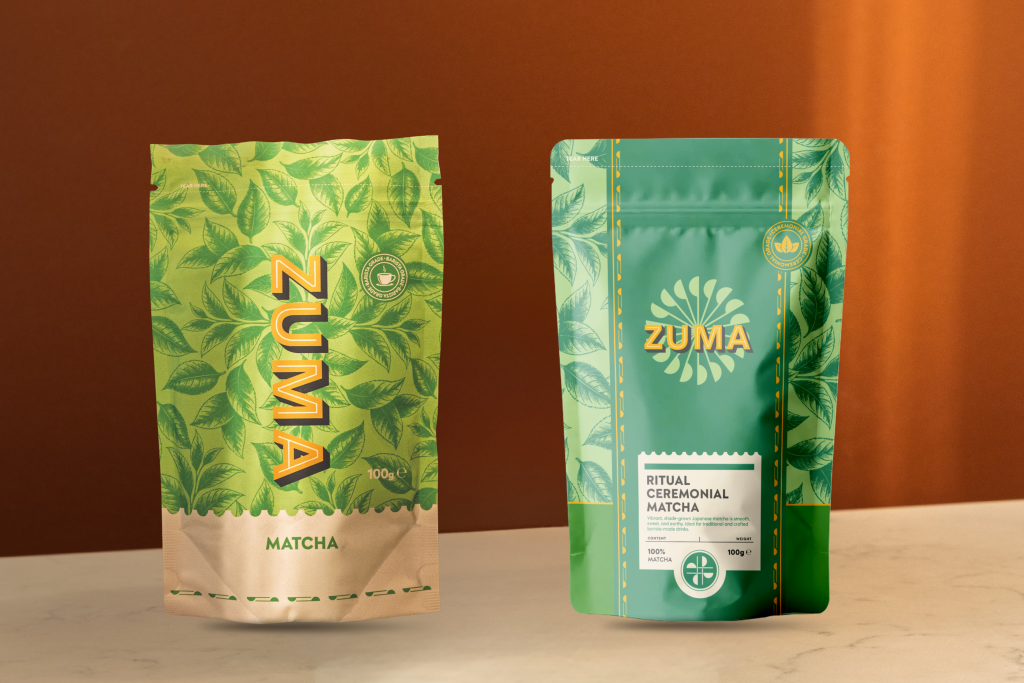
If you plan to drink matcha simply whisked with water, a ceremonial matcha such as the Zuma Ritual Ceremonial Matcha will almost always be the more enjoyable choice since it is usually consumed plain, allowing you to fully experience its natural flavour.
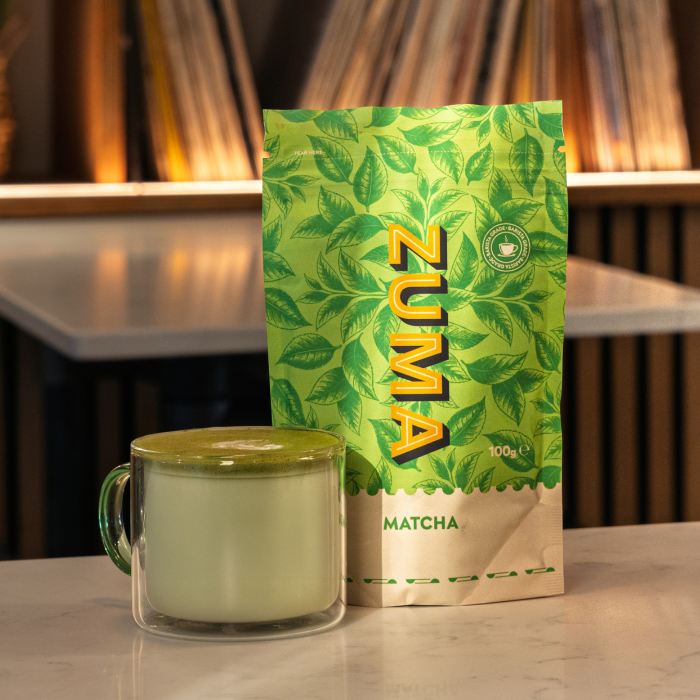
If you’re adding milk, syrups, or baking with it, culinary matcha such as the Zuma Original Matcha is often better suited. Ceremonial matcha is usually consumed plain, allowing you to fully experience its natural flavour.
Ceremonial vs Culinary Matcha: How They’re Made
While all matcha comes from the same plant (Camellia sinensis) – it is the differences in harvest timing and leaf selection that play a big role in grading.
You may have heard of the term ‘first harvest’ – this simply means It’s made from younger tea leaves; the first 1-3 leaves (the “flush”). Ceremonial matcha is typically made from the first flush, which are softer and richer in flavour. Culinary matcha often uses later harvest leaves, which develop stronger, more tannic characteristics.
Both ceremonial and culinary matcha are shade-grown before harvest and stone-ground into powder, but the care taken in leaf selection is what drives the difference in flavour and experience.
Where Does Zuma Classic Ceremonial Matcha Fit?
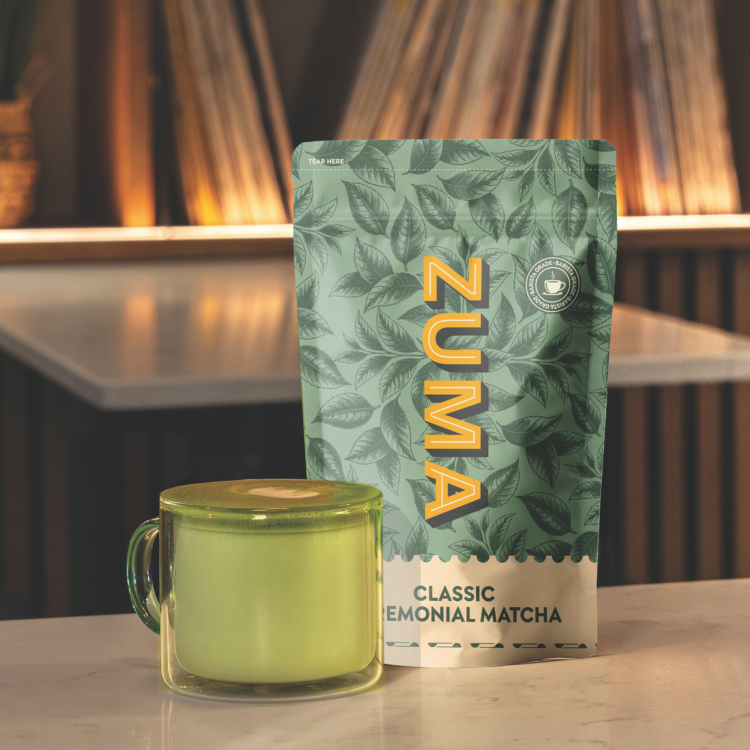
Let us welcome the latest edition to the Zuma matcha family: the Zuma Classic Ceremonial Matcha. But where on the spectrum does it fit between Ceremonial and Culinary matcha grades?
Positioned between our Original Matcha and our Ritual Ceremonial Matcha. It is a natural next step for anyone looking to elevate their matcha experience while keeping it approachable and consistent.
Zuma Classic Ceremonial Matcha is designed for those who want a refined, smooth cup of matcha as part of a daily ritual – without the extreme price tag of “competition grade” teas. It’s the perfect answer for someone asking “which grade of matcha is best for everyday use?” – both for quality drinking and baking.
Which Matcha Should You Choose for Your Cafe?
Now that we know the difference between ceremonial vs culinary matcha, this should help you in choosing. But note, there’s no single “best” matcha – only the best matcha for you. Your choice can change depending on the moment and many people keep more than one type on hand.
- Choose culinary matcha for your cafe if you love lattes, smoothies, or baking.
- Choose ceremonial matcha if you enjoy drinking matcha with water and appreciating its natural flavour.
- Choose Zuma Classic Ceremonial Matcha if you want a balanced, everyday drinking matcha that bridges quality and ease.
When buying ceremonial grade matcha, look beyond the label. Freshness, sourcing, colour, and flavour tell you far more than a grade name alone. A high-quality ceremonial matcha should be vibrant green, finely milled, and smooth on the palate.
As interest in matcha continues to grow in the UK and beyond, choosing thoughtfully sourced matcha ensures a better cup! Check out the full range of Zuma matcha.